
Landowners
& Habitat Survey
2026 Landowners Meeting
In March 2026, we hosted a landowner meeting to provide a summary of the habitat survey results, and invited guest speakers to talk about how they may be able to help projects within the valley to support the ecological health and resilience of the catchment. You can download their presentations below:
2025 Habitat Survey Results
The results of the habitat survey have landed!
The final report can be downloaded below to read at your leisure. We’ve created a brief summary to help you get an overview of the findings, and a summary about the barriers along the river. We’ve also sectioned out the report by stream/river, so you can jump to the information that’s most relevant for you.
Summary of the River Sid Catchment Assessment 2025
Main recommendations:
- Removal or modification of major barriers (especially School Weir)
- Improvement of river habitat complexity and restoring natural processes
- Planting and managing riverside vegetation
- Creation of buffer zones to reduce erosion and pollution
- Control of invasive species

Habitat Walkover by Stream
We’ve broken the main report down into individual rivers and streams to help you jump to the section that’s most relevant for you. Click on the section to view the reports for each waterbody.
Summary of the barriers
- Concrete weirs (often large and steep) e.g. School weir
- Culverts (frequently perched or undersized) e.g.
- Bridge aprons and footings e.g. Buckley Bridge over Roncombe Stream
- Ford crossings reinforced with concrete or boulders e.g. Sidmouth

Concrete Weirs Are the Most Severe Obstacles
Large weirs (e.g. School Weir, Sidford Mill Weir) appear near-vertical and impassable.
Even smaller concrete weirs are significant barriers to migration,
they often have thin “laminar” flow (too shallow for fish) and no suitable resting pools.
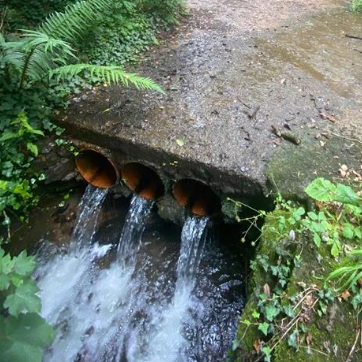
Culverts Frequently
Create Barriers
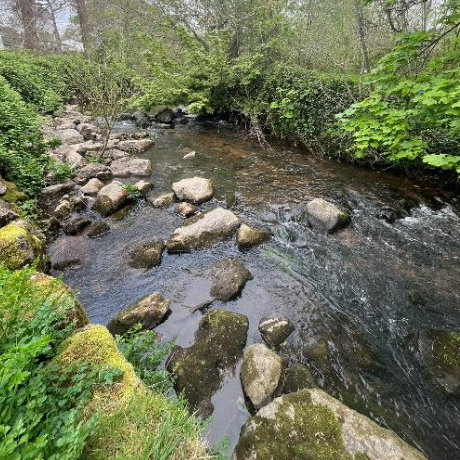
Boulder and check weirs are widespread but often partially passable
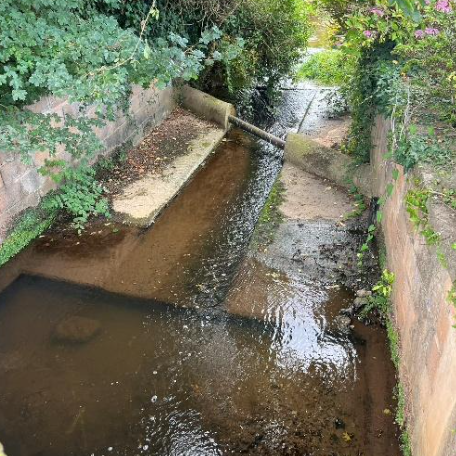
Modified channels are concrete-lined channels and straightened or engineered sections. These create a uniform (homogenous) flow, and a lack of natural features like pools and gravels reducing both habitat diversity and fish passage.
Barrier Prioritisation
From the habitat survey, the Westcountry River’s Trust have created a priority order for the barriers to be worked on. We’ve pulled out the first and most urgent priorities. There are 9 further pages to cover the full 102 identified barriers. You can view the full list from page 158 of the Barrier Appendix.

2025 Habitat Survey Intentions
In 2025, we contacted riparian landowners along the River Sid and its tributaries to ask for permission for Westcountry River’s Trust to access their land to carry out habitat surveys. We wanted to survey the journey of migrating fish to understand what barriers and obstacles they face, and quality of river habitats improving access for migrating fish and eels.
What did surveying involve?
Surveying is a non-invasive process carried out by up to two people. It is a simple walkover visually assessing and recording river habitats and in stream structures as in the photograph.
Hannah Parvin was the Westcountry Rivers Trust Project Officer responsible for the walkover survey. The map below is an example of the output from a walkover survey showing habitat types, bankside features and points of interest within the river.

Newsletter
Subscribe to the newsletter to stay up to dates with the latest news along the River Sid,
including conservation work, volunteering opportunities, and useful information.