Himalayan Balsam
Invasive Species Removal
Himalayan Balsam
Introduction to the project
Like most rivers in the UK, invasive plant species such as Himalyan Balsalm and Japanese Knotweed, can be found along the River Sid and its tributaries. Volunteers, particularly from the Balsam Bashers, work tirelessly each spring and summer to help remove Himalayan Balsalm before it goes to seed, in areas where it is most dense.
- To work with the Balsam Bashers to remove himalayan balsam before it goes to seed and reduce its spread.
- Removing invasive species will help provide light and nutrient for other river-side plant species.
- To enlist the help of the local community to identify and remove balsalm safely.
Project Details
The following has been written by Charles Sinclair, Chair of the River Sid Catchment Group, and volunteer with the Sid Bashers.
What is Himalayan Balsalm and why is it a problem?
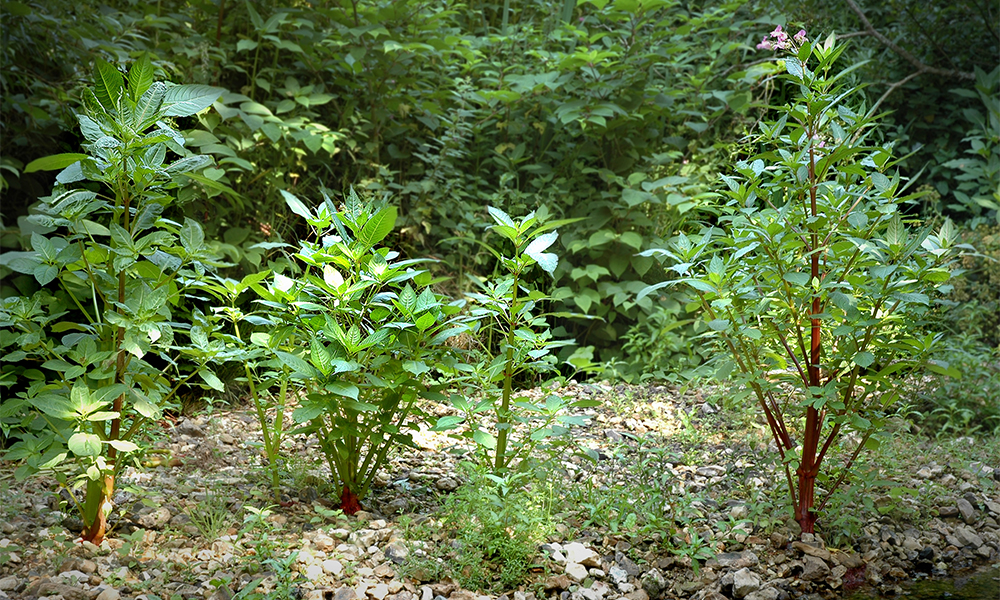
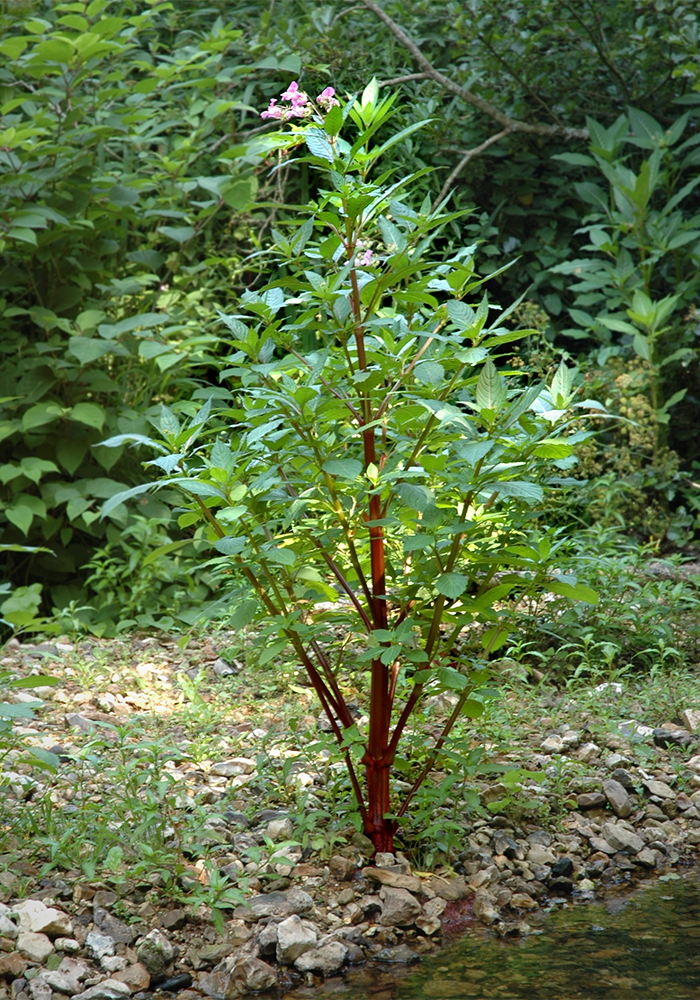
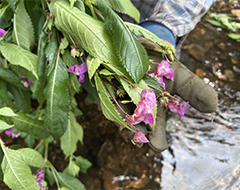
Himalayan Balsam is one of the most devastating invasive plants degrading our ecosystems. It is found frequently along waterways, because of its rapid growth it requires lots of water. Growing next to a stream also has the benefit of transporting its seed much further than the plant can manage on its own.
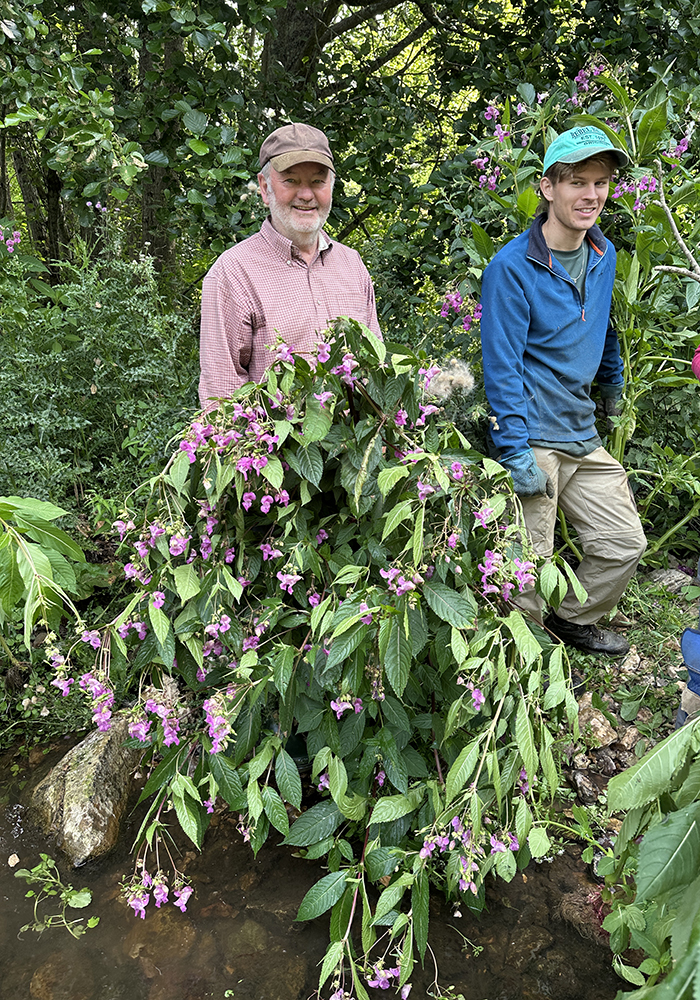
In the Sid Valley, we have determined groups of people, especially the Sid Bashers, who ensure our valley is not overrun. There are areas of river where Balsam is the dominant plant in the summer, creating a swathe of large stems topped with its characteristic pink flowers. It smothers the more delicate native species and fills the soil with seeds ready for next year’s assault. If you are not convinced by the menace Himalayan Balsam is to our environment, we would suggest a walk down the River Otter to see how much it can take over!
Himalayan Balsam is an annual plant. In good conditions it can grow to 6 feet or more in as many months. It flowers and then spreads up to 1,000 seeds that burst out of their pods and can be ejected up to 10 feet in all directions. If these seeds are carried downstream in floodwater, the whole of downstream section of the river is liable to infestation next year.
What's being done to remove or control Himalayan Balsalm?
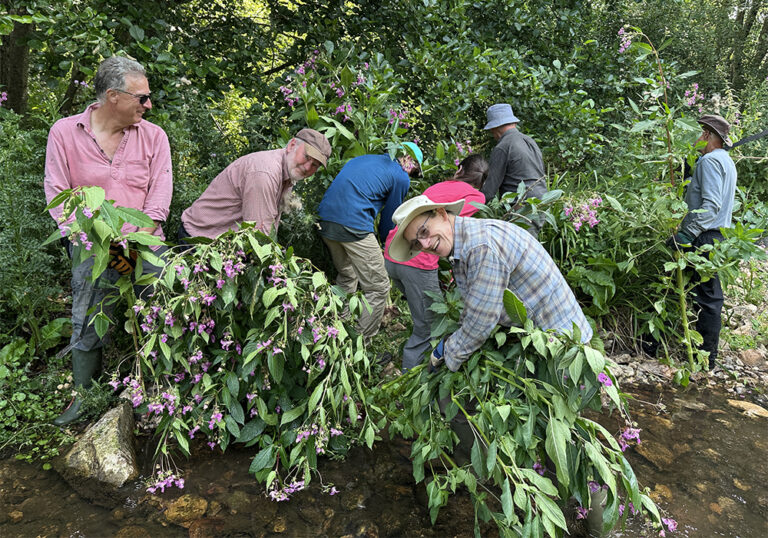
The River Sid and its tributaries are a very special area for wildlife. Himalayan Balsam is degrading the land, especially the rich riverside plant life, characteristic of a healthy river. You’ll not see much Himalayan Balsam around the Byes because the Sid Vale Association and the Friend of the Byes volunteers are very active in its removal. The Sid Bashers have an enormous impact in the area from Fortescue to Sidford. They meet weekly through the season to clear hundreds of thousands of plants. But upstream, where clearing is most effective and where the population of Himalayan Balsam is feeding the problems downstream, there is less of a systematic clearing program.
Apart from the very satisfying action of pulling the blossom, there are two other aspects I find really enjoyable. One is the camaraderie of the team of pullers, chatting on the riverbank, having a drink with biscuits, resting on a gravel bank sharing stories, while keeping an eye out for the wildlife around the river. The other is getting to explore the secret places in the valley where the river flows but rarely has any visitors, seeing how the land influences the water course and the water impacts the land; getting to know the signs of a healthy river and where it’s not at its best; and knowing I can help.
What does pulling Balsam entail?
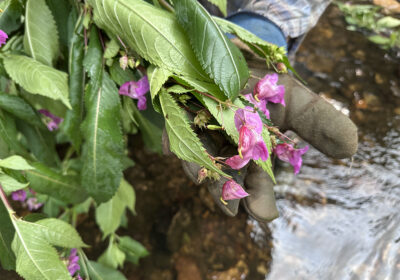
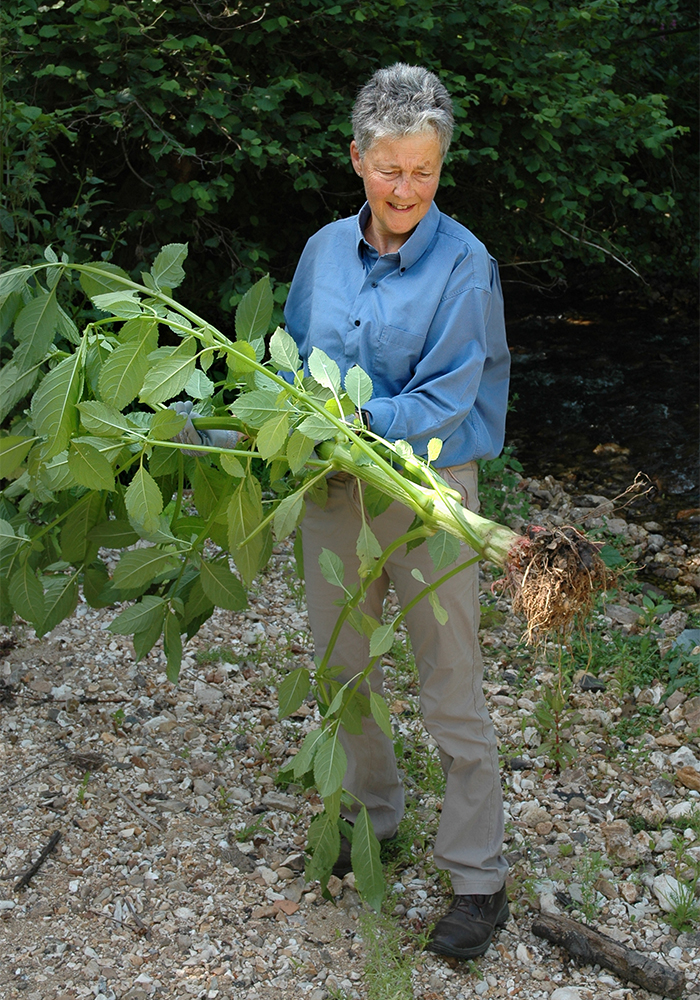
There is a sweet spot in the plants growth between when it is about 1 foot tall and quite visible within the other vegetation and the time when the seeds begin to burst, that pulling Balsam is most effective. This is in the months of April to July. It’s a very satisfying action. A quick pull up in the direction of growth and the whole plant usually comes up, roots and all; a quick snap of the stem just above the roots produces a noticeable chime and confirms its end. If you’re working in a concentration of the plants, within 15 minutes you can make a sizable pile of Balsam. Bravo.
How can you help?
The team of volunteers meets every spring to clear stretches of balsam along the River Sid. The season for 2026 is nearly finished but we will always welcome more helping hands. Email us to get involved info@riversid.org or head to the Facebook group. We’ll also be looking for additional help in tackling more locations from April – August in 2027. Let us know if you’d like to help next year, and we’ll add you to the mailing list!
Other Projects
Take a look at some of our other work and projects.
Newsletter
Subscribe to the newsletter to stay up to dates with the latest news along the River Sid,
including conservation work, volunteering opportunities, and useful information.